
If you’ve ever watched a board discussion derail because the risk data didn’t answer the question the board was actually asking, you’re not alone. Most risk programs still produce risk information — but not always risk decisions. Spreadsheets and static heatmaps can tell you what’s “high” or “medium.” They rarely tell you:
That’s the new standard for modern risk leadership: risk expressed as decisions in motion — in the language of money, time and outcomes. And AI is accelerating this shift fast. Research from the 2026 What Directors Think report shows the same pressure building at board level: directors want clearer risk narratives, faster insight and more strategic time — not more reporting.
CROs are increasingly expected to provide the golden thread: a connected view that ties strategy to risk, controls, audit and board oversight across the enterprise. The reality is that most organizations are still running GRC like a set of disconnected tools — risk here, audit there, third-party risk somewhere else, reporting stitched together in PowerPoint. AI changes what’s possible, but only if it’s applied to the right problem: turning fragmented risk signals into decision-ready narratives. Directors are already working this way: 84% have strengthened their scenario planning, and 47% want more structured full‑board risk discussions — clear signals that fragmented risk data no longer meets the bar.
Boards don’t debate “likelihood scores.” They debate trade-offs:
That’s why AI-driven quantification is becoming table stakes. With native AI built into your risk management system, risk leaders can translate complex risk models into:
Cyber risk is a prime example. Attack surfaces are expanding, and AI-enabled threats are increasing both speed and sophistication. CROs and CISOs need to communicate cyber exposure as a business decision, not a technical briefing.
AI helps bridge that gap: quantification and plain-language narratives that help boards make informed choices without oversimplifying.
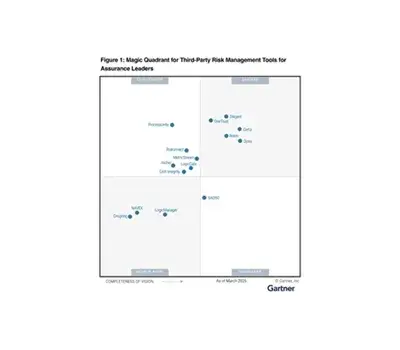
Third‑party risk is evolving fast. Yet with AI embedded into your systems, such as with 3rdRisk + Third Party Investigator (TPI), CROs get continuous third‑party intelligence instead of static questionnaires. Think dynamic scoring, AI‑driven due diligence and constant screening across ownership, sanctions and reputation. It’s a live view of exposure that plugs straight into enterprise risk and scales globally through a unified GRC portal.
Join the leaders shaping what’s next in GRC. Elevate 2026 gives you the insights, playbooks and AI know‑how to lead with confidence this year.

Audit is also changing from episodic checking to responsive, continuous assurance. AI purpose-built for audit use cases can:
That doesn’t remove the human from the process. It elevates the humans in the loop. Instead of spending cycles on manual evidence chasing, CROs, CAEs and their teams can spend time where it matters:
AI becomes the co-author of the program — and humans remain the editors, judges and decision-makers.
Here’s where the shift becomes structural.
The future of GRC isn’t better spreadsheets or prettier dashboards. It’s one connected system of work — a platform where risk, audit, compliance and third-party signals inform each other in real time. That’s what “system of action” really means:
With AI-native capabilities in a unified GRC system, CROs and auditors can move from describing risk to operationalizing risk management — continuously and credibly.
The board’s role is also evolving.
When boards receive quantified, AI-powered risk views — expressed in the material terms of the boardroom — directors shift from passive oversight to active participation in trade-offs. That shift reflects what directors themselves are asking for: 40% say AI-powered technology would improve oversight, 47% want more structured risk discussions, and 42% want fewer presentations and more debate.
This is where purpose-built AI for enterprise risk management plugs into the boardroom — flowing enterprise risk data, benchmarks and AI insights into a single, consistent board view. Consequently, the CRO helps shape board discussions with:
That’s how risk becomes a strategic tool — not a quarterly presentation.
Quantification, scenarios, third‑party intelligence, continuous assurance — all in one connected system. See how leading CROs are operationalizing risk with DiligentAI. Request a demo