GRC, short for governance, risk and compliance, is a system that can make or break modern corporations. Organizations with effective GRC tools synchronize their risk management and regulatory compliance processes. Those without them struggle with siloed information, duplicated efforts and costly blind spots.
Recent data reveals the urgency: according to the Q4 2025 GC Risk Index from Diligent Institute and Corporate Board Member, legal and compliance leaders rate the level of business risk at 7.9 out of 10 — a 16% increase from Q1 levels. Technology risks dominate concerns, with 60% of respondents citing it as a top risk today, well ahead of the economy (33%) and tariffs (23%).
These compounding pressures — regulatory, technological and geopolitical — make integrated GRC approaches essential rather than optional. Organizations that treat governance, risk and compliance as separate functions find themselves constantly reacting to problems rather than preventing them.
In this comprehensive guide, we’ll answer the following questions:
GRC stands for governance, risk and compliance. It is a system that organizations use to structure governance, risk management, and regulatory compliance. The concept is to unify an organization’s approach to risk management and regulatory compliance. Strengthening and rationalizing these processes can help improve business performance and enhance decision-making within corporate governance boards.
The OCEG coined the term GRC and formally defined it in 2007 as “the integrated collection of capabilities that enable an organization to reliably achieve objectives, address uncertainty and act with integrity.” Despite growing recession fears and trade upheavals, two-thirds of U.S. companies’ general counsel and corporate directors say they’re still prioritizing growth. As GRC transforms through AI, it will become essential in mitigating potential financial and economic crises as organizations plan for the future.
Before diving into what makes a GRC strategy effective, we’ll define and explain each component — governance, risk and compliance — individually.
Governance ensures that all organizational activities (IT operations, training, etc.) align to support and advance the organization’s overall goals and objectives. Governance typically involves the organization’s key decision-makers, such as board members or high-level executives. It defines and enforces activities like:
Governance affects how executives gather data, make strategic decisions, communicate with key stakeholders and determine who joins the board. An example of poor governance in an organization might be a group of executives engaging in insider trading or a director whose business decisions and strategies consistently reflect a lack of interest in environmental, social or legal guidelines.
Effective governance uses data, information, and hard evidence to develop strategies and make decisions. Key sources include:
Risk management involves identifying, assessing and controlling threats and risks to the organization. These threats could be financial pitfalls, legal consequences, cybersecurity threats, commercial liabilities, management errors, natural disasters, and other accidents.
"Everyone has a role to play in risk management. You don't have to be a risk professional — you can be on a school board, in a nonprofit or a large corporation. It's something everyone should be doing, looking at the risks and the future," says Amanda Carty, Managing Director of Strategic Market Solutions at Diligent.
Risk management processes typically rely on internal audits and risk assessments to identify critical gaps and areas of significant uncertainty. Risks can arise internally, within essential business operations and processes, or externally, out on the broader market.
Organizations often assign various risk management elements to individuals, including IT security leaders, business analysts, finance officers and the governance board. A robust GRC framework can help ensure that all risk management activities align with the organization’s ultimate goals and objectives.
GRC compliance involves aligning organizational activities with the laws and regulations that impact them. These regulations could be legal mandates, like privacy or environmental laws, or voluntarily established company policies and procedures.
For example, a compliance officer at a software company might work to ensure that their systems abide by regulations like GDPR. In contrast, an environmental inspector might search a construction site for environmental code violations and take the necessary steps to address them.
GRC frameworks encourage organizations to centralize compliance monitoring and stay on top of any laws or regulations that could affect their processes. Breaking compliance could result in devastating financial, legal and reputational consequences. These could include fines, time and money spent in court, and a tarnished reputation.
GRC is important because it offers a holistic view of risk that streamlines decision-making regarding issues that aren’t always unified. From regulatory changes to stakeholder demands, boards are under pressure to manage interrelated priorities that can be difficult to align.
GRC is one of the best tools boards have to integrate GRC functions and ensure that all operations align with strategic objectives while adhering to legal and regulatory requirements. Yet, in a 2023 survey of those who either manage or oversee their organization’s risk and compliance strategy, only 53% said their programs were mature, making effective adoption of GRC tools and strategies imperative.
The benefits of GRC are far-reaching and extend beyond the GRC team. Organizations that implement sound GRC practices can foster:
Unfortunately, a suboptimal approach to GRC can cause many issues. A weak strategy is typically founded on a host of disjointed activities and poor processes, including:
When organizations haphazardly create departments and arbitrary programs instead of implementing GRC best practices, they can expect to face drawbacks like:
When GRC activities are siloed and relegated to specialized departments and programs, substandard strategies are more likely to be chosen, activities are duplicated, and day-to-day business operations are slowed considerably.
It’s also helpful to note that doing GRC “wrong” is common. As organizations expand, keeping track of all the people and processes involved becomes more challenging. As the business grows, the severity and frequency of governance, risk and compliance issues also increase.
It’s natural to want to silo GRC activities and relegate them to a specialized department instead of building a strategy to incorporate them throughout your organization seamlessly. However, for your plan to be more scalable, sustainable and cost-effective, focusing on the latter approach is more likely to give you the results you’re looking for.
As the business grows, the severity and frequency of governance, risk and compliance issues also grow. It’s important to implement scalable GRC frameworks and processes that can flex to meet the organization’s needs so growth doesn’t come at the cost of regulatory compliance and ethical standards.
Organizations should perform risk assessments when considering wider business aims and objectives. Risk assessments identify potential issues throughout the business operation. Some of the more serious risks include:
These risks can impact teams differently throughout the organization. Teams most affected by the issues above include:
A GRC framework ensures these different teams work towards the same objectives.
Organizations face a rapidly changing and increasingly complex business climate. Whether you’re part of a large corporation, government agency, small business or nonprofit, you’ll face numerous challenges, including:
A disorganized approach to GRC can slow down an organization and cost more, all while achieving less, missing requisite compliance requirements and misidentifying threats to your revenue or reputation.
Too often, organizations believe that buying a single GRC platform or forming a specialized department will help resolve all of their GRC-related concerns. However, a robust GRC strategy is more than a specific tool or set of roles. A practical implementation involves:
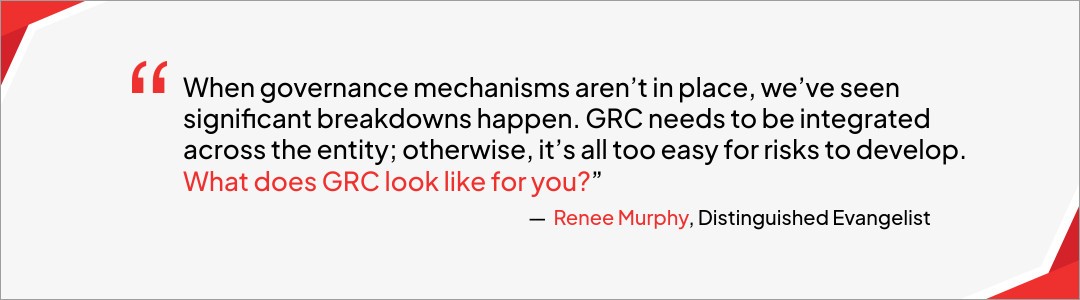
GRC breakdowns aren’t a thing of the past. Recently, regulators uncovered that employees at one of the largest banks in the U.S. attempted to meet sales targets by opening millions of unauthorized accounts and credit cards for customers. Opening accounts without consent was unethical and exposed the bank to significant legal and regulatory action.
While employees may have opened the accounts, the bank created an aggressive culture where short-term profits reigned over ethical conduct. Corporations today are under scrutiny from regulators, shareholders, and the public to uphold ethical values. This intensifies the need for GRC practices prioritizing long-term performance and detecting risks before they escalate.
Focusing on the above can help you prioritize your needs and select the right array of tools and processes that support your goals without slowing down or overcomplicating day-to-day operations.
Organizations that can implement a cohesive, integrated set of processes and technologies can expect the following:
The standard components of a strong GRC strategy include, but are not limited to:
Many organizations approach GRC management by constructing overly complex and specialized programs in risk management, performance management, compliance, internal auditing and corporate social responsibility. The danger in this is creating too many disconnected silos that slow down communication, limit access to critical information and duplicate activities due to a lack of transparency and knowledge across the organization.
The best GRC strategy may be invisible. The goal is for your selected tools, technologies, and processes to become “baked into” the fabric of your organization so that any GRC standards and practices become a natural part of doing business.
A governance, risk and compliance framework is a structured approach to implementing GRC processes. A practical framework offers a systematic way to identify, assess, prioritize, and mitigate risks, ensuring that business operations follow a consistent set of ethical and security standards and comply with laws and regulations.
While a GRC framework can stand on its own, organizations can also integrate it with other risk management standards to broaden their risk management strategy, including:
The Committee of Sponsoring Organizations of the Treadway Commission (COSO) framework is a reputable ERM framework that businesses across industries use to create a more holistic view of risk. Integrating COSO principles into a GRC model helps corporations layer accepted risk management best practices over their governance and compliance objectives.
Organizations use this framework to help design, implement and maintain effective internal controls and risk management practices that make it easier to achieve business objectives and reduce fraud risk.
The National Institute of Standards and Technology (NIST) Cybersecurity Framework is a repeatable process for managing and improving cybersecurity. Within GRC, it offers a structure for identifying, responding to and recovering from cybersecurity threats — a must, given that cyber-attacks spiked in 2023.
Organizations apply NIST best practices across five core functions: identify, protect, detect, respond and recover. Within each function, the framework provides guidelines and best practices that risk leaders and teams can use to build and refine their cybersecurity programs.
The International Organization for Standardization (ISO) offers guidance on various business needs, including information security and risk management. The ISO 31000 standards specifically complement GRC by offering documented approaches organizations can leverage to improve risk management and compliance.
This framework encourages integrating risk management into organizational culture and decision-making processes, driving greater risk awareness across all levels.
Also part of the ISO, this is a globally recognized standard for establishing, implementing, maintaining and improving an information security management system. It helps organizations protect information and assets and ensure confidentiality, integrity and availability.
Risk leaders may use this framework to structure risk assessments based on their environment, ultimately protecting sensitive information.
ISACA is a global professional association that develops frameworks for IT governance and risk management, including the Control Objectives for Information and Related Technologies (COBIT). These frameworks can guide how an organization’s GRC model aligns IT governance practices with their overall objectives and regulatory landscape.
IT auditors and managers can use the COBIT framework to define control objectives, processes and metrics for IT governance — and use those objectives to measure IT performance and risk across the organization’s systems. This framework is ideal for aligning IT and business needs.
The OECG GRC capability model is a comprehensive framework offering a unified approach to organizational management across risk, governance, audit, ethics, IT and compliance. Organizations can use the capability model to enhance any of the above frameworks as their sole methodology for developing and improving GRC practices.
Developed from a study of nearly 300 large corporations, the model offers GRC best practices organized into four components:
While these components are steps organizations can take toward a robust GRC strategy, they are also a formula for modern GRC software. For example, technology like the Diligent One Platform integrates a learn/align/perform/evaluate approach to offer organizations powerful, immediate and actionable insight into GRC entity-wide.
Discover the exact steps to create a governance framework that aligns with your organization's objectives.

A GRC team is a coordinated group of employees who oversee and implement the GRC program. These could be employees dedicated exclusively to GRC activities or stakeholders from other departments and business units who advise on their work's GRC implications.
A typical GRC team structure will include the following roles:
GRC is a destination, not a journey. The best GRC strategies will evolve over time, ahead of the risks they intend to identify, manage and mitigate. Putting that program in place requires robust structures and a commitment to embedding risk awareness within everyday business practices.
Here’s how.
Implementing a GRC framework involves aligning governance, risk management and compliance processes with organizational goals and embedding them into your organization. The process typically starts with understanding the organization’s risk landscape, regulatory requirements and current controls, then selecting a suitable framework or combination of frameworks that fit the organization’s size, industry and maturity level.
Successful implementation of GRC requires securing executive buy-in and fostering collaboration between key teams: IT, legal, compliance, risk management and business units. Implementation should be viewed as an ongoing journey rather than a one-time project, with continuous monitoring, training and improvement built into the process.
There are six key steps to take when implementing GRC:
Reaching GRC maturity isn’t often smooth sailing. But knowing the hurdles you may face can help you overcome them. Some common challenges in GRC implementation include:
Implementing a GRC model can seem complex, as it generally includes internal auditing of existing processes and procedures. Each established area of the organization will likely have its own way of performing risk assessments or compliance monitoring. However, a unified approach with shared expertise is the best way to achieve the organization's overall aims.
With this in mind, there are ways to make launching the GRC program more straightforward. Here are five tips for implementing a GRC framework in an organization.
Spending time taking stock of existing processes is vital if the GRC program is to be a success. Organizations should perform an internal audit of the processes and procedures used by the risk assessment and compliance teams.
Approaches in departments and teams’ fields will differ, but the aim is to establish similarities and shared processes. The results of the internal audit will help shape the direction of the whole GRC project.
It’s also important to define all relevant regulations, contracts, laws, and legislation the organization may need to comply with. For example, organizations that process cardholder data will likely need to be compliant with the Payment Card Industry Data Security Standard. Once highlighted, the scale and scope of the GRC program can be decided.
The benefits of a unified GRC approach should be clear to any members of senior management. After all, it means better access to reports, analytics, and evidence, which help shape strategic decisions. Plus, improved risk management processes mean those strategic decisions are well-informed in the first place.
Senior management should provide a clear idea of the organization’s overall aims and strategy, which in turn will set the tone of the GRC project. If the board can decide on a unified GRC strategy, it will be easier to embed the project in the wider organization.
GRC tools such as compliance software or reliable board management software will help streamline the project. GRC software will provide one area to record all the different risk assessments and internal audits. In addition, it can help with compliance monitoring. This centralized data can then be accessed and visualized remotely for instant access to trends and records.
The GRC software will also help trace processes and procedures used within different teams or roles. By centralizing processes and software within one platform, organizations can explore the trends found within different silos.
Assessing existing processes and procedures should answer the question: Can it be improved? The main aim of a GRC program is to drive improvements to risk assessment and compliance monitoring. Both aspects are integral to the ongoing success of an organization.
Risk management directly informs decisions on the organization’s growth or the improvement of services and products. A project to unify GRC programs should aim to improve risk assessment and management processes. This can be achieved through efficiency savings by sharing resources across teams and departments or refining processes. The overall performance of the business should improve as a result.
Circling back to the goals of your GRC initiative is critical. There should be regular communication and clarity with all of the organization’s members about the objectives. GRC, by its very nature, is far-reaching and comprehensive, as the process will review the breadth of an organization.
Launching a new GRC system will require training and engagement campaigns, so project communication is important. Questionnaires, surveys and interviews are useful for gaining insight into different processes across teams and departments. Plus, any changes in the process will need to be announced and managed.
This is particularly true if the organization introduces a new tool or piece of software to deliver the GRC system. Any changes in technology will require an element of engagement or training.
Assessing GRC maturity helps organizations understand where they stand in the governance, risk and compliance journey and what steps they need to take to improve. A maturity assessment evaluates the extent to which GRC activities are integrated, proactive and aligned with business objectives.
A typical GRC assessment will take a closer look at maturity across governance, risk management, compliance, technology and culture. Depending on how an organization rates across those areas, it can rank itself on a scale like the following:
Clear roles and responsibilities can propel a more effective GRC program where everyone works together, not against each other. Several stakeholders play distinct yet equally essential roles, including:
GRC doesn’t look the same from region to region or organization to organization. An organization’s specific risk management needs may vary based on its structure, regulatory landscape and jurisdiction. Here, we look closer at GRC in the real world — and how GRC solutions help.
A U.S. financial services company recently completed its eighth acquisition. While the acquisitions had gone smoothly, the board saw a need for a GRC tool for banks that would reduce the risk associated with them. Its internal audit, risk and compliance teams were using basic tools like Excel and individually investing in other GRC platforms, leading to siloes that added unnecessary risk.
The CRO sought a single solution for several use cases: ERM, compliance, policy management, internal audit and SOX. Adopting Diligent ERM gave the company an integrated view of risk across the organization, complete with a more advanced, risk-based approach to controls testing. It also busted silos by introducing enhanced workflows that engaged teams across departments and provided visibility to the board.
A large biotech manufacturer recently went through a Federal Corruption Practices Act (FCPA) enforcement action that resulted in a $50 million settlement. Because of that, the organization learned of extensive quality issues within the reports from its existing third-party management software vendor:
The manufacturer also laid off compliance team members due to COVID-19, making it difficult to keep up with all facets of compliance. It centralized these GRC processes and more into one system, allowing for greater visibility and efficiency. Data intelligence tools, managed services, and stronger investigative reports powered by over 300 highly trained global analysts gave the manufacturer the data and support it needed to improve its compliance program.
Australia’s largest nonprofit health, aged care, disability and community service provider helps people from all walks of life across its 460 locations. It needed an enterprise-grade software system to bring all its risk and assurance-related data together, leveraging those insights to drive internal audit and support management to deliver targeted risk and assurance assessments in real time.
To achieve this, the provider would need to connect several major operating systems — SAP, AX9, AX12, D365, three timesheet systems and three clinical government systems — to aggregate all of its data in a single platform. Building out Diligent’s healthcare GRC software enabled them to connect this data easily and then configure the tool for specific teams so they could generate the insights they needed.
Company-wide stakeholders could tap into the platform when needed, driving a better understanding of the business and a more sustainable, value-driving healthcare GRC program.
A large U.S. technology company needed to consolidate its IT compliance program to meet multiple global certification requirements. However, their current GRC tools were inefficient and outdated. Its data sources were growing, but only becoming more disparate rather than connected and managed.
It adopted the Diligent One Platform, introducing a common controls framework with more than 3,000 global certifications. It could implement standardized controls enterprise-wide and align those controls with central policies and practices. These modern systems helped the company meet the demands of ever-changing regulatory requirements and power-efficient, strategic decision-making.
Artificial intelligence (AI) is the double-edged sword of GRC. While AI can expedite much of the work of GRC teams, it also compounds the risks that many organizations already grapple with.
“It is yet another reminder of a potential risk on the horizon. But on the flip side of that, the way artificial intelligence can help our clients evolve how they do governance […] but even more so as we think about the backdrop of risk. AI has the unique opportunity to help so many of us identify, signal and noise [risks] and help make sure they can mitigate those risks,” Diligent CEO & President Brian Stafford said on the 150th episode of The Corporate Director Podcast.
However, in many ways, AI can be its own solution — if GRC teams learn how to integrate it effectively into their day-to-day.
Here’s what GRC teams need to know to get started.
GRC can often be reactive in that teams identify and fill existing risk management gaps or adapt to how regulations have already evolved. Generate AI is changing that landscape by transforming GRC into a more predictive, proactive capability by accelerating data analysis, enhancing decision-making and streamlining policy creation.
What does this look like in practice? GRC teams can simulate risk scenarios, pinpoint insights from vast datasets and draft compliance documents. Each AI-powered tool catalyzes more modern GRC that gets ahead of risk and compliance concerns rather than waiting for them to unfold.
“I think of AI as being something that can be helpful in making sure that you don’t miss anything, make you better, and hopefully, through that, make so many organizations safer,” said Stafford.
AI can be applied effectively across all pillars of GRC:
AI can significantly enhance risk management by automating and accelerating traditionally laborious and time-intensive tasks prone to human error. Here’s how:
AI can significantly accelerate regulatory compliance by keeping GRC teams abreast of any changes in their landscape. Tools like Diligent AI enable you to:
Many GRC tasks are time and data-intensive, but they’re also highly repetitive. AI can automate many of these tasks, reducing manual workloads and freeing up GRC team members to serve more strategic roles. These are some core GRC activities AI can automate:
Selecting the right GRC software is a critical decision that will impact your organization’s ability to manage risk, meet regulatory requirements and align with strategic goals. While software isn’t always one-size-fits-all, the ideal platform should not only streamline compliance but also support a proactive approach to GRC.
The best GRC solutions have:
Selecting the right GRC software is a critical decision that impacts your organization's ability to manage risk, meet regulatory requirements and align with strategic goals. The ideal platform should not only streamline compliance but also support a proactive approach to GRC.
The Diligent One Platform provides the only single-platform GRC solution with modular AI-powered capabilities that meet organizations at any stage in their GRC maturity journey. The platform integrates with 100+ third-party systems, including SAP, Oracle, Salesforce and Microsoft, creating unified governance intelligence without requiring organizations to replace existing business systems.
What distinguishes Diligent is its unique combination of board governance and GRC capabilities on a single platform — no other solution unifies board management, risk, audit, compliance and ESG in one integrated system.
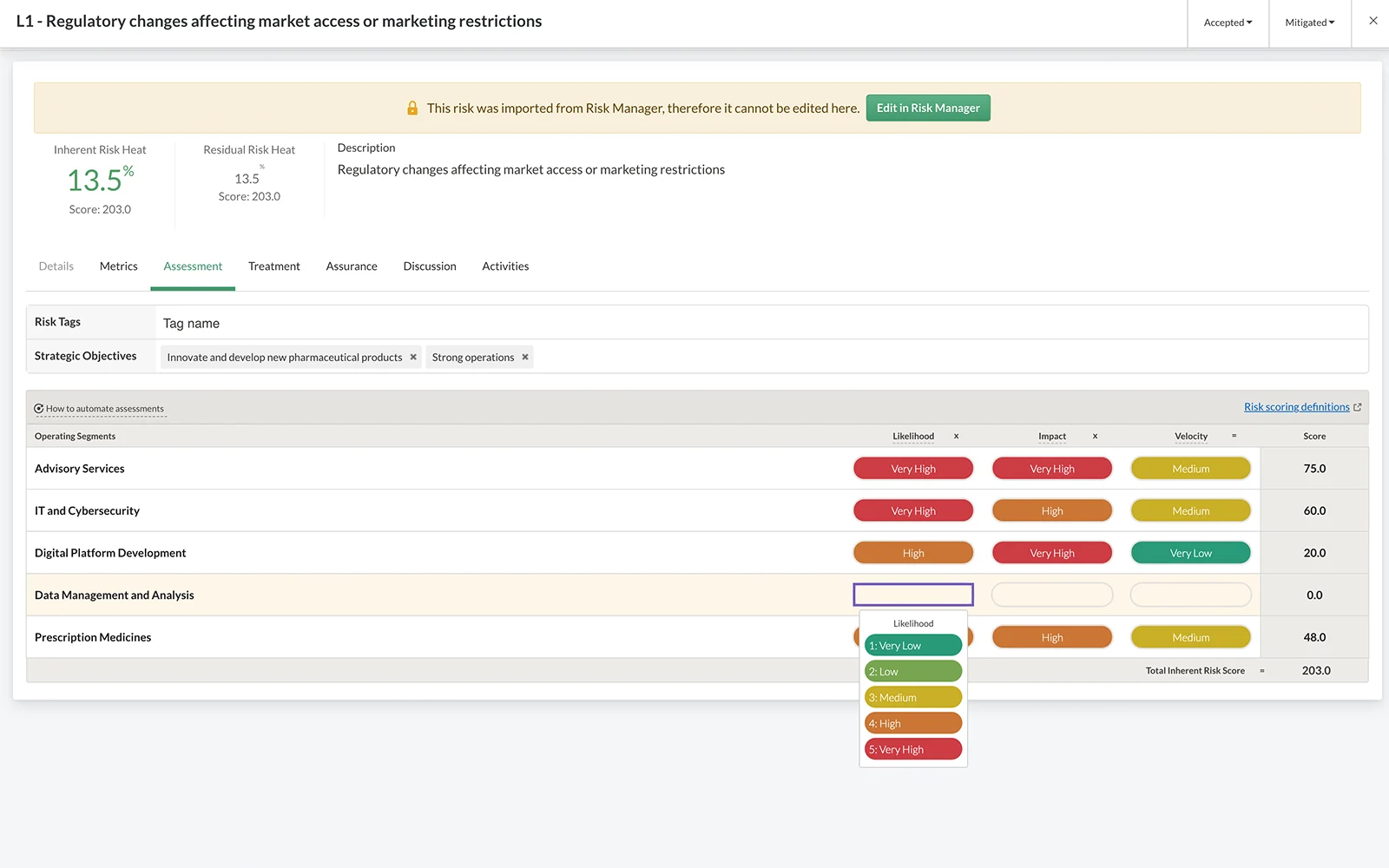
This means risk insights flow directly to board reporting, compliance status informs governance decisions, and audit findings connect to strategic oversight without manual data transfers between disconnected systems.
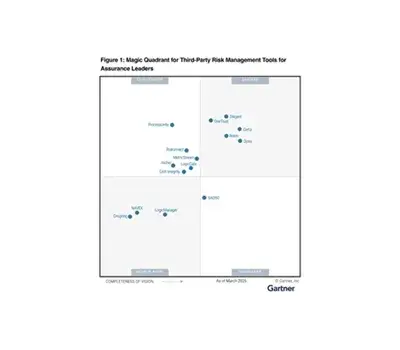
The platform serves more than 1 million users and 700,000 board members across 25,000+ organizations, including the majority of Fortune 500 companies, FTSE 100 firms and ASX 200 enterprises. Diligent was named a Leader in the 2025 Gartner Magic Quadrant for Governance, Risk and Compliance Tools.
Key capabilities include:
LogicGate offers a flexible GRC platform known for workflow customization and broad enterprise GRC capabilities. According to LogicGate's documentation, the platform provides no-code workflow builders and integrates with existing enterprise systems for risk, compliance and audit management.
LogicGate's Risk Cloud supports use cases spanning enterprise risk management, third-party risk, compliance management and IT risk.
ServiceNow GRC provides governance, risk and compliance capabilities within its broader IT service management platform. Per ServiceNow's website, the platform offers integrated risk management, policy and compliance management and continuous monitoring capabilities for organizations already using ServiceNow infrastructure.
The platform connects GRC workflows with IT service management, security operations and business continuity planning.
MetricStream delivers enterprise-grade GRC software spanning risk management, compliance, audit and third-party risk. The company's documentation indicates the platform supports multiple frameworks and regulatory requirements across industries.
Additionally, MetricStream provides AI-powered risk quantification, regulatory change management and ESG risk capabilities.
AuditBoard focuses on connected risk, audit and compliance management. According to AuditBoard's website, the platform serves internal audit teams and SOX compliance functions with collaborative workflows and reporting capabilities.
The platform also offers operational auditing, compliance management and risk assessment modules that extend beyond its core SOX compliance strengths.
Workiva provides a cloud platform for audit management and regulatory reporting. Per Workiva's documentation, the platform emphasizes data connectivity and reporting automation for finance, audit and risk teams.
Workiva differentiates through its focus on connected reporting — linking data across financial statements, SEC filings, ESG disclosures and internal reports.
Archer IRM offers integrated risk management solutions for enterprise organizations. The company's website describes capabilities spanning operational risk, IT risk, third-party governance and regulatory compliance.
The platform provides extensive customization options and supports complex organizational structures with multiple business units.
IBM OpenPages provides an AI-powered GRC platform. Per IBM's documentation, the platform offers risk management, regulatory compliance, IT governance and financial controls management for large enterprises.
OpenPages leverages IBM's Watson AI capabilities for risk insights and regulatory intelligence. The platform integrates with IBM's broader enterprise software ecosystem, making it a natural choice for organizations already invested in IBM infrastructure.
Vanta specializes in continuous compliance automation, particularly for SOC 2, ISO 27001, HIPAA and other security certifications. According to Vanta's website, the platform serves growing companies and startups seeking automated compliance monitoring.
The platform continuously monitors infrastructure and automatically collects evidence for compliance audits, significantly reducing manual preparation time.
ZenGRC offers user-friendly GRC software designed for mid-market organizations. The company's documentation highlights ease of use and pre-built templates for common compliance frameworks.
ZenGRC positions itself as an accessible alternative to enterprise GRC platforms, with implementation timelines and pricing structures suited for mid-sized organizations.
Evaluating GRC platforms with AI capabilities? Download our comprehensive buyer's guide to compare features, ask the right questions and select technology that fits your organization's needs.

AI represents a tremendous opportunity, but it also introduces critical ethical questions and risks worth considering. Without careful oversight, AI systems can unintentionally perpetuate or amplify bias. This can lead to inaccurate risk assessments rooted in discriminatory compliance practices or biased decision-making.
Understanding how AI makes decisions is also challenging, if not impossible. This so-called “black box” can make it difficult to explain and justify AI-driven actions to regulators or stakeholders. Without that justification, who do you hold accountable for AI-driven outcomes?
Privacy and security are also a concern. Popular public AI tools like ChatGPT train models using vast amounts of data, often gleaned from user inputs. This may not respect privacy regulations like GDPR and could become a larger risk if the AI system becomes compromised or used unethically.
Like most risks, however, the key is identifying and managing potential adverse outcomes while embracing the many positives. Programs like the AI Ethics & Board Oversight Certification from Diligent Institute can equip your board with the knowledge to make sound, ethical decisions about GRC AI tools.
Looking ahead to 2026, the future of GRC will likely be shaped by:
AI has revolutionized GRC operations and will continue serving as a linchpin in organizational strategies to keep up with cyber and other fast-evolving risks. Tools like predictive analytics, AI-powered monitoring and workflow automation increase GRC speed, accuracy and scalability while reducing compliance costs.
"AI is the single most transformative opportunity for legal, finance and compliance teams in the next decade," says Stafford. "This isn't about replacing people — it's about amplifying them, helping your team spend less time on manual tasks and more time on strategic decision-making."
ESG risks are becoming a central pillar of GRC. Companies are aligning ESG risks with broader ERM frameworks at the same time that regulators are pushing for more uniform disclosures, putting ESG reporting in the spotlight.
Stakeholders will also continue to expect organizations to demonstrate ethical governance and sustainability, not just profitability.
The human side of GRC is also gaining attention. More companies are investing in GRC training, leadership accountability and ethical decision-making.
This transformation has brought with it an emphasis on risk-aware cultures that empower employees to take ownership of GRC practices and report any issues they find. As GRC understanding spreads across organizations, it will become a strategic competency, not just a compliance function.
Digital transformation has made cybersecurity and third-party risk dominant GRC concerns. “Cybersecurity remains a major risk. [Boards] are looking into it at every meeting, bringing the right people into the meetings to help them in their discussions. Nobody is letting down their guard,” said Nolen.
Organizations are adopting more rigorous due diligence and continuous risk monitoring for vendors and partners. Many GRC frameworks also encompass supply chain vulnerabilities, ransomware threats and data privacy risks. AI will only increase the focus on data governance as bad actors adopt and leverage new, smarter tools.
Agility is critical in an era of rapid change. Continuous and dynamic risk management is replacing annual risk assessments, which are too infrequent to paint a meaningful risk picture. Scenario modeling, real-time alerts and flexible policies allow faster adaptation to change — whether market shifts, crises or regulatory updates.
"Cross-functional coordination is key for operating in a world where top risks are interdependent and self-amplifying, where geopolitical, regulatory and technology currents shift together," says Kira Ciccarelli, Senior Manager of Research at the Diligent Institute. "And yet, GRC integration remains a major execution gap."
According to Diligent's Transaction Readiness Report, only 4% of governance professionals say their GRC and financial systems are fully integrated. In an ideal future state, GRC systems should flow in a single stream so that one trigger — whether a cyber alert, a tariff change or an AI policy shift — automatically informs the others.
After you have clearly defined organizational objectives, established an effective communications strategy and enforced the best controls for your organization, the right tools and technology can help you stay on top of your GRC activities.
The Diligent One Platform can help you get a consolidated view of risk across the organization to help your board make more strategic decisions. Boards and GRC teams can access the platform anytime, anywhere, and on almost any device.
This unified solution allows organizations to:
Ready to transform your GRC capabilities? Schedule a demo to learn how a centralized governance solution can accelerate your GRC strategy.
GRC, in simple terms, refers to the integrated approach of managing governance, risk, and compliance within an organization to achieve its objectives effectively.
GRC stands for governance, risk and compliance. In risk management, GRC is a framework that helps organizations align their risk strategies with business goals, establish governance policies and ensure compliance with regulatory requirements. GRC enables a proactive and integrated approach to identifying, assessing, mitigating and monitoring risk across the enterprise.
In cybersecurity, GRC stands for governance, risk and compliance and refers to the structured approach organizations use to manage cyber risk. GRC in cybersecurity helps enforce security policies, ensure regulatory compliance (like GDPR or HIPAA) and align IT security efforts with business objectives. It supports continuous monitoring, threat assessment, and response planning.
Cybersecurity and GRC are deeply interconnected. GRC provides the strategic framework that guides cybersecurity practices, helping organizations manage security risks, implement controls and demonstrate compliance. Cyber threats are a key risk category, and GRC ensures these risks are identified, prioritized and addressed through governance structures, security policies, and regulatory oversight.
GRC and ESG are increasingly integrated. ESG introduces new risk and compliance dimensions — such as climate risk, ethical sourcing and social impact — that GRC frameworks must now address. A modern GRC program supports ESG by providing oversight, risk assessment, reporting and accountability mechanisms.
The fundamentals of governance involve establishing structures and processes for decision-making and accountability. Risk management entails identifying, assessing, and mitigating potential threats to the organization’s objectives. Compliance ensures adherence to relevant laws, regulations, and standards.
To integrate GRC into your program management lifecycle:
Integrating GRC ensures that your programs remain compliant, resilient, and aligned with strategic goals.
GRC software is a technological solution designed to streamline and automate an organization’s governance, risk management, and compliance processes. It helps centralize data, track activities, and facilitate reporting to ensure adherence to regulatory requirements and internal policies.
GRC tools encompass a range of software applications, platforms, and methodologies used to support governance, risk management, and compliance activities. These tools may include risk assessment software, policy management systems, compliance tracking tools, and audit management platforms.
GRC software refers to any tool that supports specific GRC functions, such as compliance tracking or risk reporting.
A GRC platform, on the other hand, is a comprehensive, integrated solution that unifies multiple GRC modules — like risk management, compliance, policy, audit and third-party risk — into a centralized system. GRC platforms offer broader visibility and automation across the organization.
While GRC encompasses various aspects of cybersecurity, it is not solely focused on cybersecurity. Instead, GRC provides a broader framework for managing risks across all areas of an organization, including cybersecurity. Effective GRC practices incorporate cybersecurity measures to protect against threats and ensure compliance with relevant regulations.
Several GRC platforms offer strong security questionnaire automation, but the right platform depends on your organization’s needs. Look for platforms that automate vendor risk assessments, streamline third-party security questionnaires and provide AI-powered workflows for faster reviews and responses.
Features like template libraries, response reuse and integration with procurement tools can also strengthen security questionnaires. Discover how you can integrate AI with confidence to your GRC operations.
Yes, with the right tools and frameworks, it’s possible to set up a basic risk program in days instead of months. Cloud-based GRC platforms like Diligent AI Risk Essentials can get you up and running in a week with minimal IT lift. Its prebuilt templates, three-step workflows and board-ready reporting accelerate deployment.
While more complex risk strategies may require time, a functional, compliant and scalable program can be launched rapidly using this modern GRC technology.
Book a demo to discover how the Diligent One Platform delivers the integrated oversight and AI-powered intelligence your organization needs.