
In this article

Board meetings are where critical decisions take shape, risks are assessed, and long-term strategies are set. Yet for corporate secretaries, general counsels, and board administrators charged with managing them, they are often logistical marathons, demanding hours of preparation, document distribution, and coordination.
From agenda-building and board book compilation to securing approvals and capturing minutes, traditional board meeting workflows remain manual, fragmented and time-consuming. AI board meeting preparation tools now automate these processes, while AI for board meeting minutes eliminates hours of manual transcription work.
Such inefficiencies in traditional governance ultimately slow down decision-making and expose organizations to compliance risks.
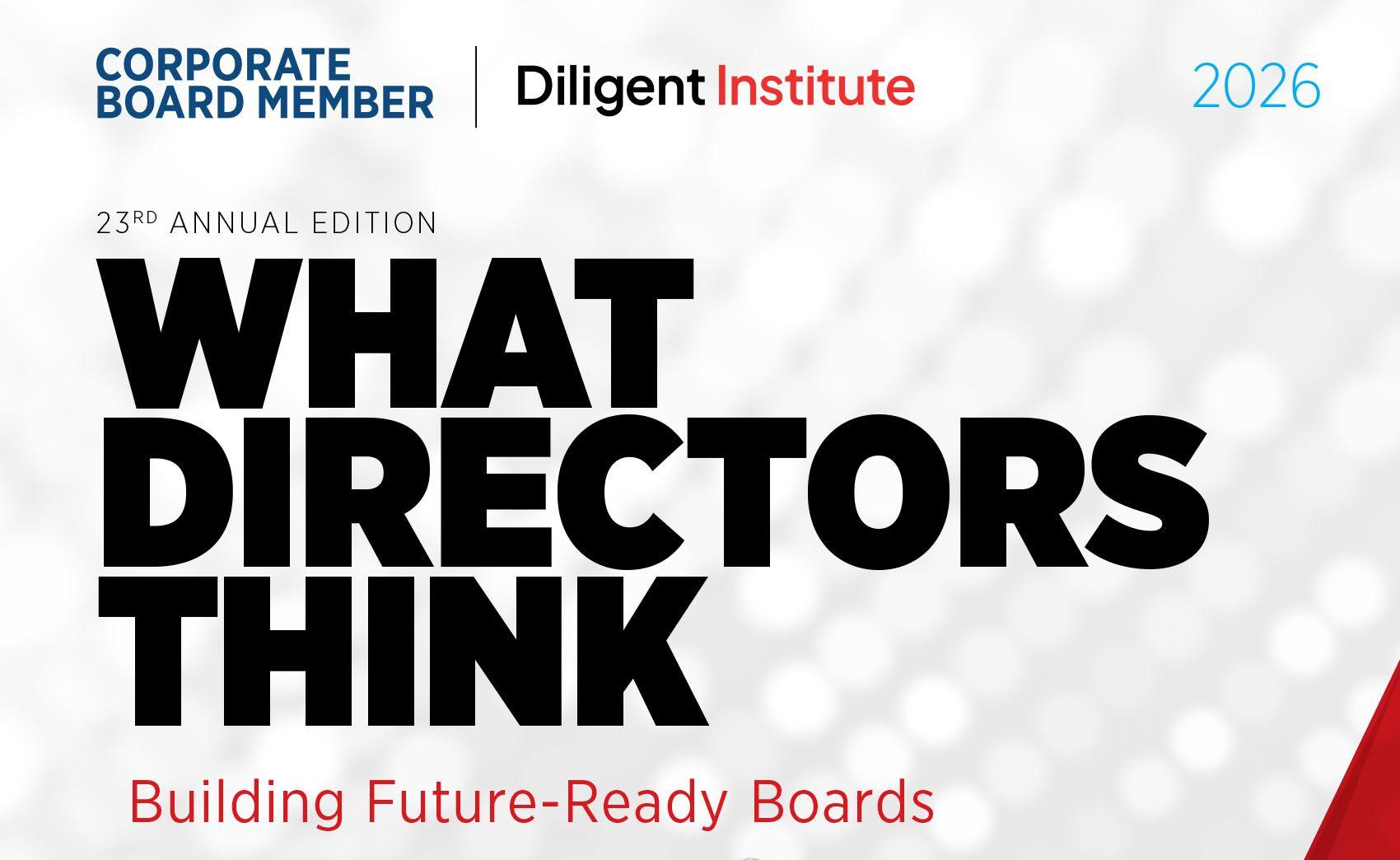
Directors are feeling the pressure: According to the 2026 What Directors Think report from Corporate Board Member and Diligent Institute, 58% of directors want more time for strategic planning, and 42% want fewer presentations and more discussion, yet 53% say they don't often receive real-time data between meetings.
Purpose-built AI-powered tools are now changing how board meetings are run, freeing governance teams from administrative burdens and enabling directors to focus on informed decision-making, risk oversight and strategic governance.
If your organization is exploring AI for board meetings, this guide covers:
A well-structured agenda is the backbone of a productive board meeting. But building one from scratch can be time-consuming — especially when manually pulling in agenda items, coordinating inputs, and making last-minute adjustments while ensuring strategic priorities receive appropriate attention. AI-powered board management technology helps by providing the following:
"Giving the information in advance helps board members better prepare. They can also return to previous meetings and, if they have questions about what was discussed, review it easily. We also share the draft agenda before it's published to help show them what's going to be discussed at the meeting," says Catherine Hill, Executive Secretary at Vigo County School Corporation.
Overall, streamlined agenda creation enables a greater focus on strategic priorities that drive business outcomes.
Missed the AI Virtual Summit? Watch expert-led sessions on GRC, risk, audit & compliance — on your schedule.

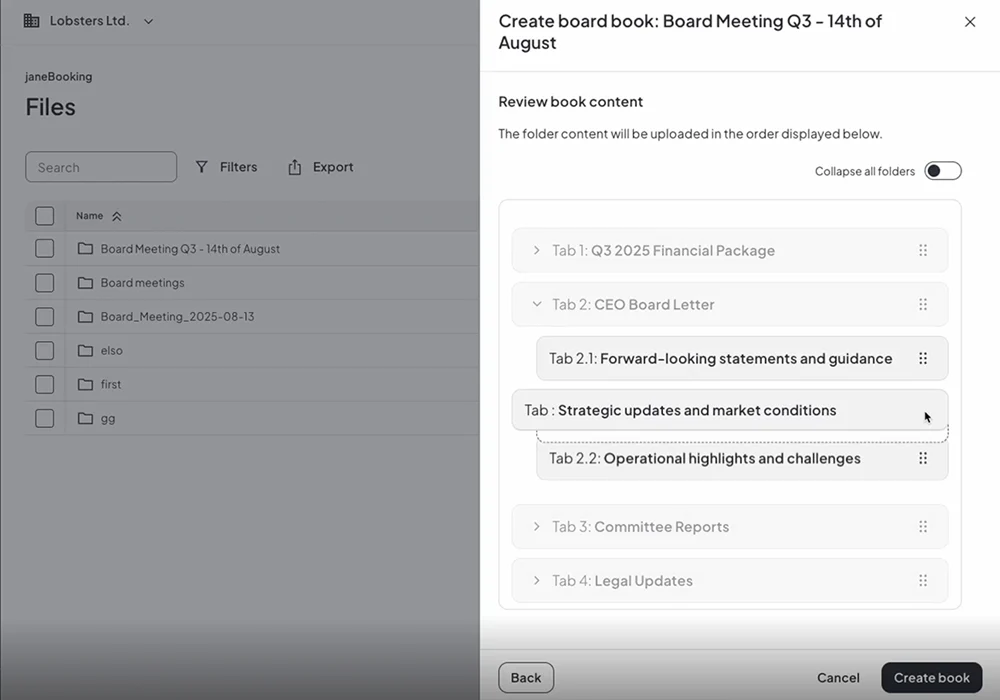
Before board documents can be reviewed, they must be assembled — and for many governance teams, this's one of the most time-consuming and error-prone steps in board meeting preparation. Manually compiling board packs from Word documents, PDFs, spreadsheets, and presentations adds pressure to already tight timelines and increases the risk of version control errors.
The challenge intensifies for organizations managing committee structures, multi-jurisdictional operations, or frequent board meetings. Each additional layer of complexity increases manual effort and the risk of documentation gaps that create compliance vulnerabilities.
To mitigate these vulnerabilities, board management technology offers the following capabilities:
"Our [Diligent] platform has revolutionized how we access information, creating a seamless system of checks and balances across our committees. Before using this platform, we relied on fragmented systems; now everything is streamlined on a single platform, enabling us to manage our operations more efficiently. Features like real-time updates and easy document management have streamlined our operations, making our meetings more effective and efficient," says Bing Goldsworth, Executive Assistant at Organically Grown Company.
Ultimately, automating board book creation can significantly reduce manual work while improving accuracy and presentation quality — giving governance professionals more time to focus on strategic board support and risk analysis.
Once agendas are set and board books assembled, governance teams must securely distribute meeting materials. Without centralized systems, this process creates chaos — leading to version-control issues, last-minute scrambling, and directors receiving outdated or incomplete materials that undermine their ability to prepare effectively.
Even when materials are delivered on time, the result is often a dense, overwhelming board pack that makes it difficult for directors to identify the most important information before meetings. Directors managing multiple board commitments need efficient ways to prepare without sacrificing the depth of understanding required for informed decision-making.
Advanced platforms address these challenges through intelligent distribution and synthesis:
With reliable document management and AI-driven summaries, directors are no longer buried in information — they arrive at meetings better prepared and ready to engage in meaningful strategic discussions.
Board members often need to collaborate before meetings — yet email and unsecured messaging tools create governance risks that can expose organizations to regulatory scrutiny and confidentiality breaches. To handle these hurdles, board management technology provides:
Directors need timely insights at their fingertips. Secure, intelligent communication platforms ensure both confidentiality and effectiveness.
A well-run board meeting focuses on strategic decisions, risk management and long-term planning. However, directors often struggle to extract key insights from dense materials, resulting in discussions that lack focus or a data-driven direction.
The challenge for governance professionals is ensuring this intelligence reaches directors in actionable formats that enhance rather than overwhelm meeting discussions. Leading platforms provide several capabilities to optimize board engagement:
Once the meeting begins, governance teams need tools that support smooth execution without creating administrative distractions. Traditional meetings often struggle to manage live voting, capture decisions, track attendance, and ensure all participants can engage effectively regardless of location.
The challenge intensifies for organizations with virtual or hybrid board meetings, where technical difficulties can disrupt discussions, voting processes become cumbersome, and the lack of real-time documentation creates gaps that must be reconstructed later from memory or incomplete notes.
AI-enabled governance platforms provide comprehensive capabilities:
Real-time tools eliminate the administrative friction that disrupts meeting flow, allowing boards to focus on strategic discussions rather than technical logistics. Proper execution also ensures that decisions, votes, and key discussion points are accurately captured as they occur. This reduces delays in post-meeting documentation.
The work doesn't stop when the meeting ends — decisions, approvals, and follow-ups must be properly documented to meet regulatory requirements and maintain comprehensive audit trails. Traditional minute-taking is time-consuming, error-prone, and often requires multiple rounds of revisions, with governance professionals spending hours transcribing discussions, reformatting notes, and ensuring regulatory compliance.
AI-powered minute-taking tools reduce this burden by automatically capturing key discussions, decisions, and action items during board meetings. These tools analyze meeting transcripts, identify substantive decisions, and generate structured minutes that highlight key actions and drive business forward.align with corporate governance standards and regulatory requirements.
AI board meeting preparation and documentation tools process meeting content through several automated steps. First, the technology captures meeting discussions through integrated transcription or direct input from board materials. Then, machine learning models identify decision points, formal resolutions, votes, and action items while filtering out procedural discussions and tangential conversations.
The AI generates draft minutes structured according to corporate templates, including attendee lists, agenda items discussed, decisions made, votes recorded, and assigned follow-up actions. These drafts maintain an appropriate tone and level of formality while ensuring consistency with previous meeting records.
Intelligent platforms provide these specific minute generation capabilities:
Human oversight remains essential. While AI accelerates minute creation and improves consistency, governance teams must maintain oversight throughout the process. AI-generated minutes require review and approval by corporate secretaries or designated governance professionals to ensure accuracy, appropriate tone, and alignment with corporate policies.
The goal is not to eliminate human judgment but to free governance professionals from tedious transcription work so they can focus on ensuring minutes accurately reflect board discussions and strategic decisions.
Creating minutes is only half the challenge. The approval process often becomes a bottleneck, delaying the finalization of the corporate record. Traditional workflows involve multiple email exchanges, version control confusion, conflicting edits from different reviewers, and uncertainty about who has reviewed or approved what.
This approval friction creates real risks. Delayed minutes can create governance gaps during regulatory reviews or legal proceedings. Version control errors can result in different board members referencing different documents. And manual tracking of approval status forces governance teams to chase down busy directors and executives for sign-offs.
Advanced platforms eliminate these approval bottlenecks with the following features:
Streamlined approval workflows transform what takes weeks of back-and-forth into processes that finalize in minutes or days. This reduces governance gaps, improves compliance posture, and ensures the corporate record is complete when needed for regulatory reviews, audits, or legal proceedings.
Additionally, faster finalization means action items can be distributed sooner, accelerating execution on board decisions.
Board meetings are only successful if decisions lead to action. Yet, too often, follow-ups fall through the cracks due to a lack of structure and tracking. This undermines board effectiveness and creates the perception that board guidance doesn't translate into operational results.
The challenge intensifies when action items span multiple business units, require coordination across global operations, or involve regulatory compliance deadlines where missed milestones create exposure.
Intelligent governance platforms ensure comprehensive follow-through:
AI ensures board decisions are acted upon, reinforcing accountability while maintaining the documentation necessary for regulatory compliance and demonstrating to stakeholders that board oversight translates into operational execution.
See how AI-first board meeting preparation and minute generation tools streamline governance workflows and enhance board effectiveness for enterprise organizations.

As AI becomes infrastructure rather than innovation, boards face a critical fiduciary responsibility: ensuring that AI tools used in governance uphold the highest standards of ethics, transparency, and accountability.
Not all AI solutions are created equal for governance applications. Organizations must prioritize platforms designed for board-level security, compliance, and governance requirements.
The most effective AI-driven board management platforms maintain rigorous data security standards, provide complete transparency into how AI processes information, and ensure governance professionals and boards retain full control over all AI-assisted decisions.
Key considerations for responsible AI adoption in board operations include:
Organizations that prioritize these principles mitigate AI-related risks and establish governance infrastructure that enhances stakeholder confidence, improves board effectiveness, and demonstrates effective oversight.
While AI-powered board management tools deliver substantial operational benefits, organizations must evaluate important risk and governance considerations before implementing these technologies.
Enterprise boards have fiduciary responsibilities to ensure AI tools uphold confidentiality, accuracy, and compliance standards appropriate for sensitive governance discussions.
Boards discuss privileged information, strategic initiatives, and confidential business matters that require the highest security standards. Organizations evaluating AI board meeting tools must confirm that:
Data isolation and confidentiality: Company data remains confidential and isolated, with no use of board materials to train external AI models or sharing with other organizations. AI providers should contractually guarantee that board content stays segregated and protected.
Access restrictions: Human personnel at AI providers should have no access to board materials except under specifically defined extraordinary circumstances, with comprehensive logging of any access instances.
Third-party data sharing prohibitions: AI providers must not share board data with any third party without explicit consent, and must maintain strict confidentiality protections.
Cybersecurity infrastructure: AI providers should maintain effective cybersecurity programs reasonably designed to protect board data, including enterprise-grade encryption, secure data storage, and comprehensive access controls.
AI-generated meeting transcripts, summaries, and minutes may contain inaccuracies and should never be considered final without human review. Corporate secretaries or designated governance professionals must review and revise all AI-generated materials prior to circulation and entry into official corporate records.
This review process ensures that AI outputs accurately reflect board discussions, maintain appropriate tone and formality, and comply with corporate governance standards. The secretary should formally adopt AI-assisted materials as accurate, complete, and fit for purpose before they become part of the permanent corporate record.
AI meeting tools may not be appropriate for board discussions involving privileged attorney-client communications, ongoing litigation strategy, or highly confidential regulatory compliance matters. Organizations must evaluate whether AI transcription or summarization tools could compromise privilege or inadvertently disclose information.
To reduce privilege waiver risks, access to and dissemination of AI-generated materials containing potentially privileged information should be limited to meeting participants and others within the scope of the privilege. Organizations should establish clear protocols for determining when to disable AI tools during portions of board meetings involving privileged discussions.
Organizations must understand where AI-generated materials are stored, how they are circulated, applicable retention schedules, and preservation obligations. The creation of detailed AI transcripts and summaries may result in discoverable materials that are subject to litigation holds and document production requests.
Boards should consider the risk-reward balance of creating, retaining, and distributing large volumes of AI-generated recordings, transcripts, and summaries of board meetings. While comprehensive documentation supports governance quality, excessive detail may create litigation exposure or complicate discovery processes.
Organizations should establish policies addressing: automatic deletion schedules for AI-generated drafts versus final approved minutes; circulation lists for AI materials containing sensitive information; and procedures for identifying when AI-generated content may be subject to litigation holds.
Many organizations maintain information barriers that restrict access to sensitive information across business units or functions. Companies should ensure that AI meeting tools respect existing information walls and permission structures, preventing inadvertent disclosure of restricted information through AI-generated summaries or distribution systems.
This requires coordination between governance teams, IT security, and legal departments to verify that AI tools integrate with existing access control frameworks and maintain appropriate segregation of sensitive information.
Organizations implementing AI in board operations should establish comprehensive policies addressing these risk areas:
Clear usage protocols: Define when AI tools should be used in board meetings and when they should be disabled for privileged or highly confidential discussions.
Review and approval workflows: Establish mandatory review procedures for all AI-generated board materials before circulation or entry into corporate records.
Data retention standards: Specify retention schedules for AI-generated drafts, transcripts, and working materials versus final approved minutes.
Security requirements: Define minimum security, encryption, and access control standards for AI platforms used in board operations.
Training and compliance: Ensure board members, executives, and governance professionals understand AI tool limitations, review requirements, and confidentiality protocols.
Organizations that proactively address these considerations mitigate AI-related risks while capturing the operational benefits of AI-powered governance tools. This balanced approach supports both board effectiveness and responsible technology governance
The right technology infrastructure lays the foundation for strong governance quality. Organizations should evaluate board management platforms based on capabilities that address governance challenges — from initial planning through meeting execution, to final documentation and follow-through.
With this in mind, Diligent offers a comprehensive suite of AI-driven board management tools. This includes the following:
Diligent Boards provides the foundation for AI-enhanced board operations, offering enterprise-grade security, intuitive collaboration tools, and intelligent automation throughout the meeting lifecycle.
Ready to see how Diligent’s board management solutions can transform your board meeting management? Request a demo.
Enterprise AI governance tools must meet federal cybersecurity standards, including dataset verification protocols, secure data storage requirements, and comprehensive audit trails.
AI minute generation tools automatically capture key discussions, decisions, and formal resolutions during board meetings, producing structured draft minutes that include all required elements such as attendees, agenda items, votes recorded, and action items assigned.
These tools process meeting transcripts and board materials to identify substantive decisions while filtering out procedural discussions, then generate drafts structured according to corporate templates with appropriate tone and formality.
Corporate secretaries review and approve AI-generated minutes to ensure accuracy and compliance before they become part of the official corporate record, significantly reducing manual transcription time while maintaining governance quality standards.
AI governance platforms automate compliance with SEC requirements, including cybersecurity incident disclosure, insider trading policy reporting in Form 10-K filings, and comprehensive audit trail maintenance for Sarbanes-Oxley compliance.
Enterprise-grade AI board management platforms feature secure, encrypted environments specifically designed for privileged communications between boards, management, and legal counsel. These systems maintain the segregation of privileged information, provide comprehensive access logs for legal review, and ensure compliance with attorney-client privilege requirements, while enabling efficient governance and collaboration.
Organizations typically report substantial improvements in board meeting preparation workflows and document management efficiency. AI-powered summarization tools help directors better understand complex materials, leading to more focused strategic discussions. Additionally, automated compliance tracking can reduce regulatory risk exposure and provide a comprehensive audit trail.
Transform your board operations with Diligent’s governance tools designed for enterprise security and compliance requirements.
Read our comprehensive guide to using AI tools before, during and after your board meetings.